*Be kind to your mind. If you experience anxiety, forgetfulness, or racing thoughts- be a friend to yourself.*
Autumn is when vata dosha is naturally at its highest. This means that in the external world, and generally in ourselves as well, we are experiencing change, irregularity and fluctuation, dryness, cracking, cold, personal anxiety, or maybe even excitement, creativity, and spontaneity.
Self-care and wellness in Ayurveda brings balance to our natural states of health and harmony. In general, during this time of year, we need to attend to balancing the qualities of vata- dry, light, mobile (quick, changing), clear, cold, rough, and subtle.
The qualities of vata are neither good nor bad, they just are. But, when these qualities get out of balance, they can cause discomfort like colds, ear aches, runny noses, and popping joints. Luckily, we can soothe and nourish our bodies with simple and seasonal practices to maintain wellness all year long. These practices in Autumn include choosing seasonal and nourishing foods, using oil both in and on our bodies, grounding, and protecting ourselves from the cold and wind. If any of these practices seem obvious, that is the beauty of Ayurveda- it is so intuitive and natural.
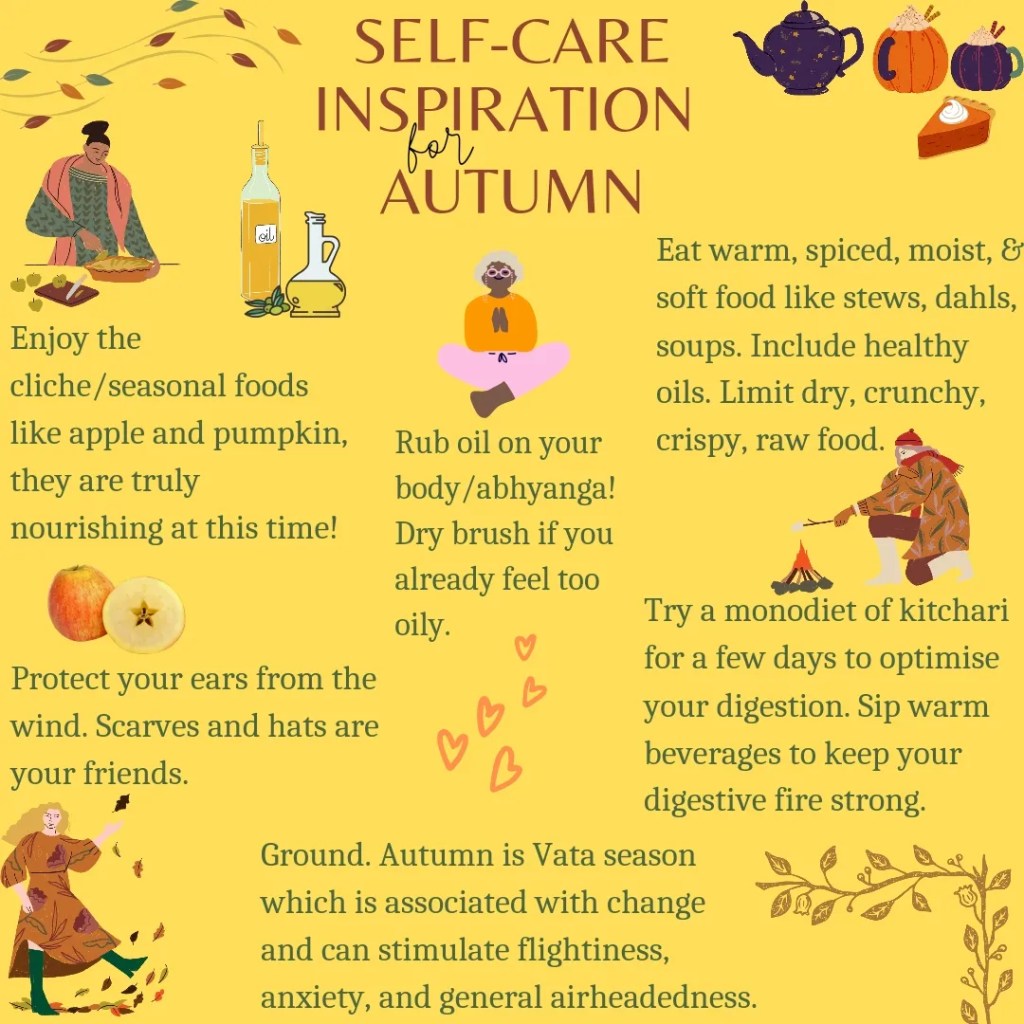
Enjoy the cliche/seasonal foods: It is best to choose natural, whole food ingredients when possible. Avoid processed and artificial ingredients. The sweet taste (natural, not refined sugar) is nourishing to vata. Some cliche/seasonal foods are apple, pumpkin, squash, sweet potato, cinnamon, nutmeg, clove. Generally, if it is in season, it is nourishing at this time. Oatmeal is also especially nourishing and grounding for vata.
Eat warm, moist, soft, spiced, cooked foods: Eating this type of food helps brings balance to the qualities of dryness and anxiousness within our system. Think of how nourishing and supportive and just nice it feels to enjoy a delicious warm stew or freshly baked pumpkin bread. That is a real effect in our body and mind that supports our total wellbeing. At this time of year we get to enjoy delicious soups, dahls, curries, stews, and healthy baked goods as part of our self-care practice. How fun! Be sure to include healthy oils and fats as part of your everyday nourishment. Limit or avoid dry, crunchy, crispy, raw food.
Rub oil on your body/abhyanga: Oiling our bodies is one of the best things we can do to support our bodies during the cold and windy fall season. This practice helps ground our nervous system and alleviate anxiety, it stimulates our lymphatic system which supports immunity, and provides much needed moisture to our skin, joints, and muscles. Organic and unrefined oils are ideal. For vata qualities (dryness, cracking, popping, flightiness, twitching), sesame oil, avocado oil, almond oil, and ghee are recommended. For pitta qualities (inflammation, heat, oily, short temper, critical) coconut or sunflower oil is recommended. For kapha qualities (cold, clammy, lethargic, stuck), mustard seed oil is recommended.
Protect your ears from the wind: Vata is called the king of dosha, because vata most easily goes out of balance in comparison to the other dosha and can cause dis-ease or dis-harmony in our systems. That’s why colds are so common during autumn. Our ears and nose are one of the channels vata (wind and cold) can enter our body. Protecting ourselves from the wind and cold is one of the most helpful things we can do to support health and wellness during changing seasons. Wear hats and scarves. Stay warm.
Try a monodiet of kitchari: When we eat the same thing for a period of time, we give our digestion a chance to have a break and rebalance. Proper digestion is key to immunity. Kitchari is one of the go to foods in Ayurveda for cleansing and nourishment. It is balancing to all the doshas and can be tailored in a variety of ways to suit anyone’s likes and needs. Kitchari, also known as kichdi and spelled different ways, is equally cleansing and nourishing at the same time. It is a vegetarian meal that provides complete protein. Kitchari is a dish of basmati rice with lentils, mung beans, or other grain or legume; spices; oil; and also veggies can be added. We can also choose dahls and soups as part of a monodiet, as long as they are warm and easily digestible. Sipping warm, herbal tea or warm water throughout the day helps keep digestion in good working order. Ginger and CCF (cumin, coriander, fennel) tea are especially supportive options. Avoid ice water, which weakens digestion.
Ground: During vata season we can experience anxiety and forgetfulness or become easily agitated or excited. Any of the practices and ideas mentioned above will help with grounding and feeling centered. Routine is also helpful for grounding. This can be routine eating times, waking/sleeping times, and including any rituals or practices on a regular basis that feel good to you. Routine sends a signal of safety to the body and mind. Getting out in nature, herbal tea like ashwaganda or skullcap, and essential oils like sandalwood and ylang ylang are also grounding and supportive. Be sure to choose movement and meditation practices that soothe, nourish, and ground you rather than excite or deplete you and move energy up into the ethers. Of course, you can also choose to consciously increase the energy of vata at this time. Consciously working with vata energy helps tap into intuition and creativity and more subtle energies. Taking time to ground after playing in the ether is strongly recommended. Always tune into your personal needs and act accordingly. These are only general ideas, each of us is so special and unique with our own varying needs. Always consult your own intuition and your healthcare practitioner.

Discover more from Heal With Dyisha
Subscribe to get the latest posts sent to your email.

1 thought on “Self-Care Inspiration for Autumn”